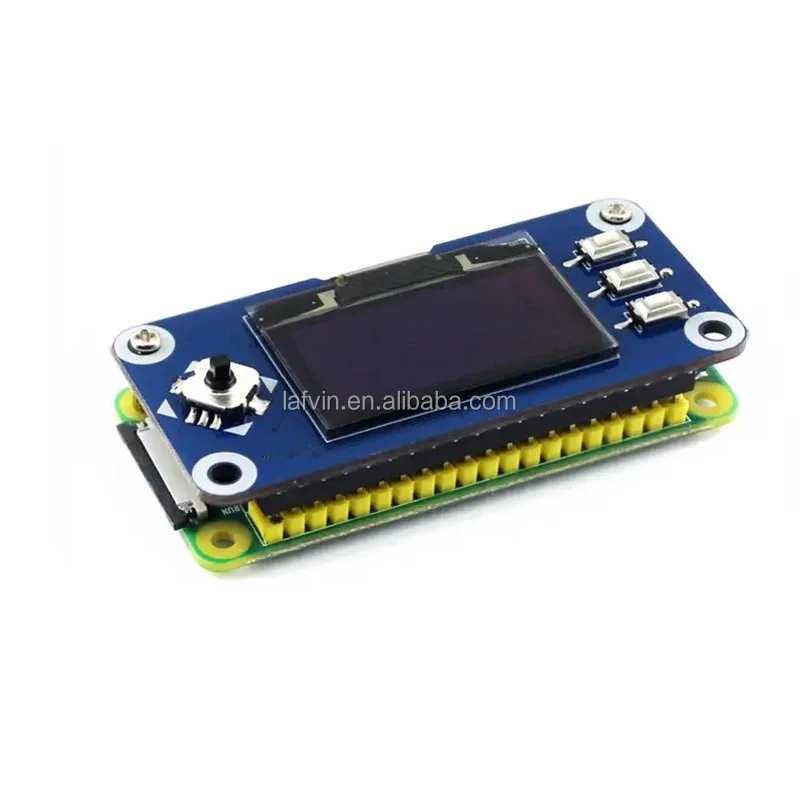
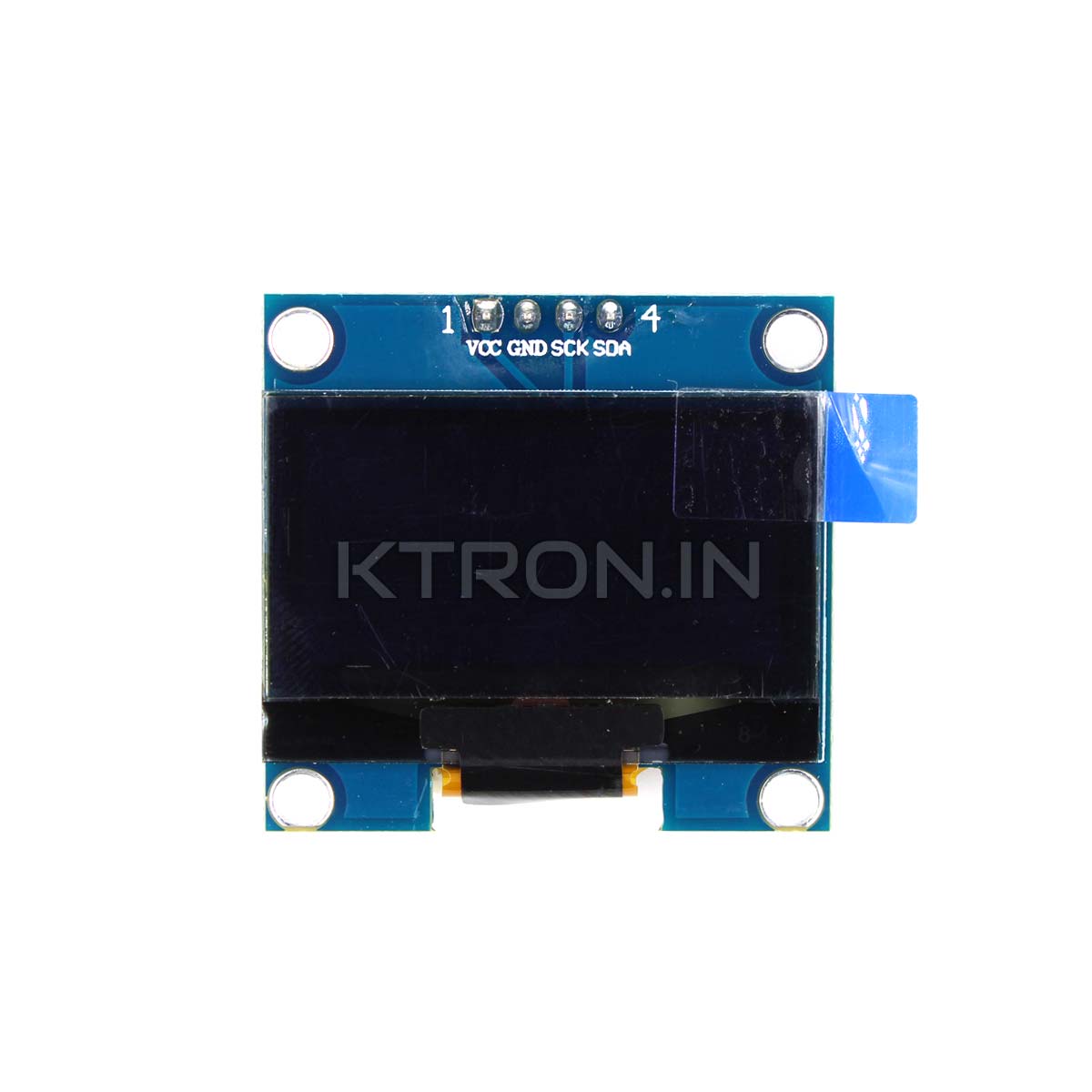
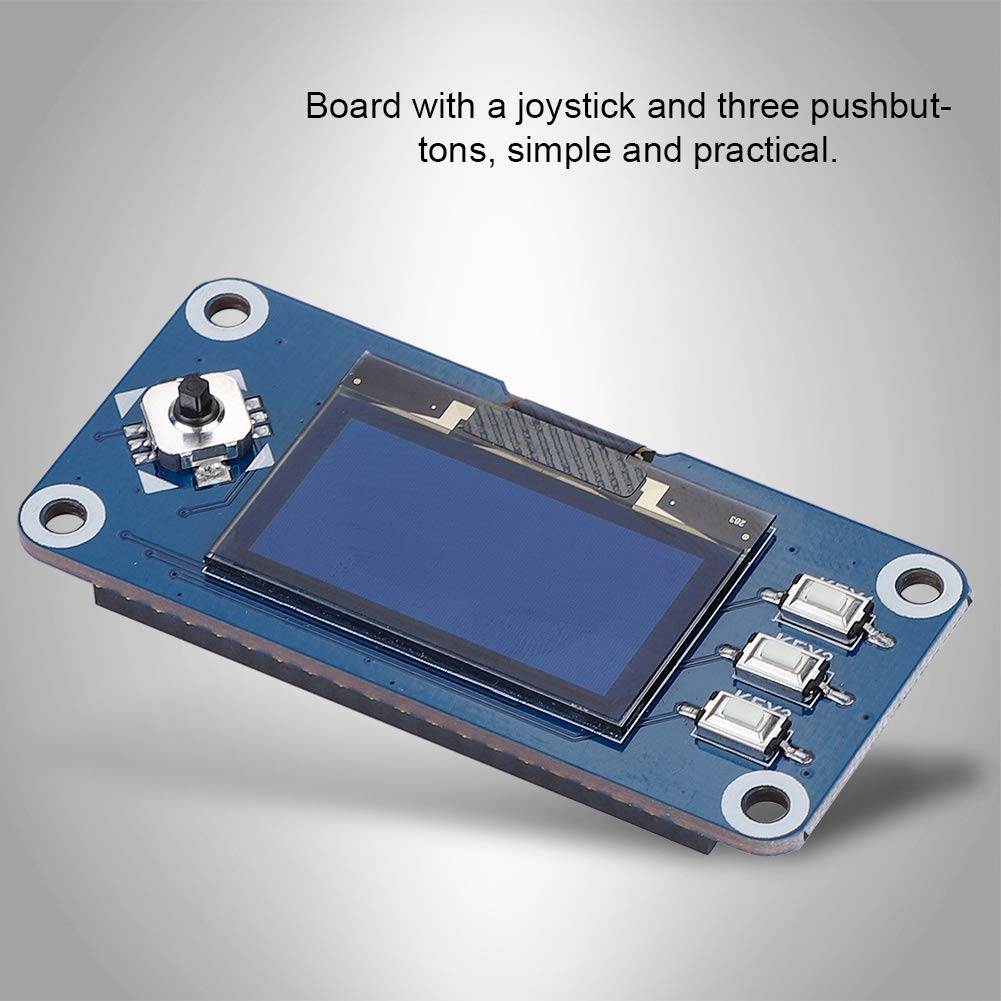
Enhance your next build with this 1., 3-inch OLED HAT display—a compact, responsive, and interactive screen solution for modern embedded designs., Package include 1., 1., 3inch OLED HAT x1 2., RPi screws pack (2pcs) x1, 🖥 1., 3 Inch OLED Display Module for Raspberry Pi: This compact OLED HAT features a 128x64 resolution blue screen, making it perfect for system status displays or menu navigation in your Rasp-berry Pi project. Integrated into the board are a 5-position joystick and 3 pushbuttons, making the module a practical solution for interactive control panels, gaming menus, or data dashboards without requiring extra input hardware. 1.3 Inch OLED Display Module for Raspberry Pi: This compact OLED HAT features a 128x64 resolution blue screen, making it perfect for system status displays or menu navigation in your Rasp-berry Pi project OLED Display 0.96 I2C 128x64 blue [Yā nǔ shén 🔌 SPI & I2C Interface OLED Display for Rasp-berry Pi 5/4/3: Supports multiple communication interfaces including 4-wire SPI, 3-wire SPI, and I2C, easily configured via onboard resistors—great for Rasp-berry Pi 5 and Jetson Nano integration. 💻 Compatible with Raspberry Pi & Jetson Nano Boards: Equipped with a standard 40PIN GPIO header, compatible with popular boards like Rasp-berry Pi 5, 4B, 3B+, Zero, and Jetson Nano—comes with sample code and manuals. 🎮 Built-in Joystick and Pushbuttons for Interaction: Features a 5-way joystick and 3 pushbuttons, making this OLED display module ideal for custom control panels or DIY user interfaces with Rasp-berry Pi or microcontroller boards. 🧩 SH1106 OLED Driver Chip for Stable Performance: Uses the SH1106 driver for reliable data handling and clear text or graphics rendering, optimized for SPI/I2C OLED display applications with embedded systems. écran Compatible Jetson Nano Raspberry Pi 5 1.3 Inch OLED Display Hat For Raspberry Pi 5/4/3/Zero, 128x64 Blue Module Sh1106 Spi I2c The 40PIN GPIO header ensures easy attachment to Rasp-berry Pi boards, while the 3., 3V operation voltage makes it compatible with a wide range of microcontroller platforms. The screen uses the SH1106 driver chip and supports 4-wire SPI, 3-wire SPI, and I2C interfaces, configurable via onboard resistors for flexible connectivity. This allows developers to integrate the display into different platforms or switch protocols based on available GPIO resources.



 Vendeur français
 250 conseils utilisateurs