R-Value Spray Foam›
5.0 24 reviews
“We would definitely use them again and recommend them to anyone needing spray foam insulation done.”
FAQs
Why choose us?
The professionals at R Value Spray Foam have been in the construction industry for more than 20 years in the Ontario region. We are familiar with all proper building codes, how to read technical drawings to ensure proper building envelopes, and have the tools and know-how for any size of job. We were on the hunt for an insulation company that could do the work to our exacting standards, and when none could be found we decided it was time to bring our expertise to the people of Ontario. We will strive to treat every one of our clients with the care are respect we would want for ourselves.
Can spray foam insulation reduce energy bills?
By preventing air leaks and reducing heat transfer through walls, floors, and ceilings, spray foam insulation can help reduce the amount of energy needed to heat or cool a building, which can result in lower energy bills. Overall, the energy savings and other benefits of spray foam insulation can help offset the initial cost of installation, making it a cost-effective insulation option for many homeowners and businesses. By improving the energy efficiency of a building, spray foam insulation can also help reduce greenhouse gas emissions and support sustainability efforts.
What is spray foam insulation?
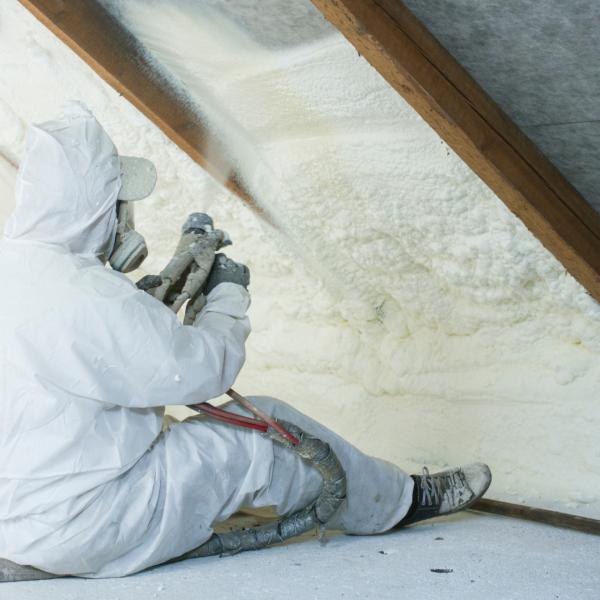
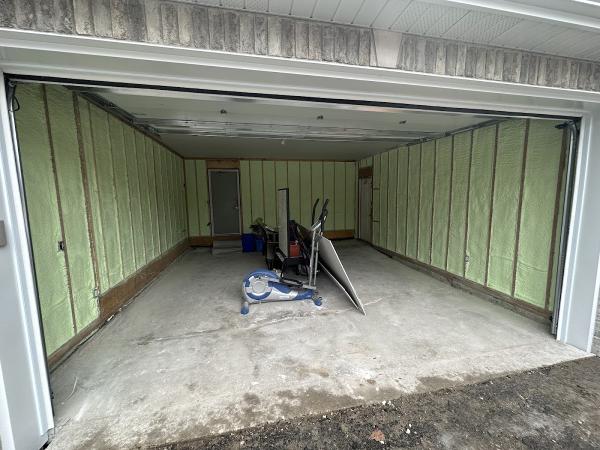
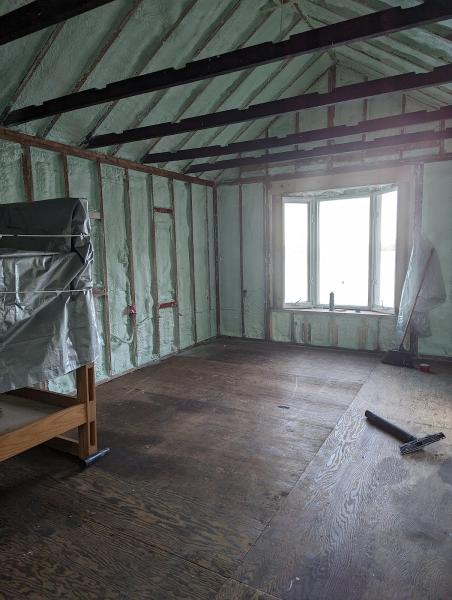
Spray foam insulation is a type of insulation that is applied to walls, ceilings, floors, and other surfaces to reduce heat loss and gain in buildings. It is made from a mixture of two chemicals, isocyanate and polyol resin, which are mixed together at the application site and then sprayed onto the surface using a special spraying machine. The chemicals react with each other to create a foam that expands and hardens into a solid, durable material that provides excellent insulation. Spray foam insulation is available in two forms: open-cell and closed-cell foam. Open-cell foam is less dense and more flexible than closed-cell foam, and is typically used for interior applications such as wall cavities or attic floors. Closed-cell foam is denser and more rigid than open-cell foam, and is commonly used for exterior applications such as roofs, walls, and foundations.
Can I install spray foam myself?
Spray foam insulation requires specialized equipment and expertise to install properly, and improper installation can result in a range of issues, including reduced effectiveness, safety hazards, and even damage to the building itself. Spray foam insulation is typically installed by professionals who have been trained and certified in its use. Professional insulation contractors have access to specialized equipment, such as high-pressure spray rigs and protective gear, and are familiar with the safety precautions that need to be taken during installation. They also have experience in selecting the appropriate type and thickness of insulation for different parts of the building envelope, and can ensure that the insulation is installed in a way that maximizes its effectiveness and durability.
Other questions that you might have are answered on the FAQ page of our website.
i