Overview: Mold Inspection & Testing
Mould is a symptom. Something got wet and stayed wet long enough to grow. The companies in this category find out why: where the water comes from, how far it has spread and what it has damaged. Removing it is a separate trade, and ideally a separate contract.
In a Canadian house, the cold does much of the damage. Warm indoor air meets a cold surface behind the finish, condenses and feeds growth inside a wall that looks fine. Basements, rim joists and attics above ice dams are the usual places. A good inspector reaches for a moisture meter and a thermal camera before any swab.
Be wary of anyone who leads with an air test. Health Canada doesn't recommend testing the air for mould in most homes. There's no exposure limit to compare a result against, and the test rarely explains the cause. Its advice is to fix the moisture, clean up the growth, and bring in a qualified professional for large areas.
Our listings show what each inspection company states on its own website. Use the province and city lists below to find inspectors working your area.
What does mould inspection cost in Canada?
Start with the question the inspection must answer. Moisture assessment and a useful report matter more than a default sampling package.
| Service | Planning budget | What it covers |
|---|---|---|
| Visual and moisture assessment | C$200–C$400per assessment | Defined affected areas; accessible surfaces, moisture investigation and findings report.Agree the affected rooms and written report before booking. Laboratory samples and opening finishes are separate.What this estimate coversIncludes in this budget: Inspection and moisture readings; Written findings Budget separately or confirm: Destructive access; Automatic air sampling |
| Whole-home moisture investigation | C$500–C$900per assessed property | House or condo: agreed rooms and accessible attic or crawlspace, moisture investigation and detailed written findings.Confirm the inspected floor area and access. Larger or difficult properties can exceed this planning range.What this estimate coversIncludes in this budget: Visual assessment, moisture readings and thermal checks; Written findings and action priorities Budget separately or confirm: Laboratory sampling or opening walls; Remediation |
| Targeted sampling when justified | C$80–C$150per justified sample added to an inspection | One agreed air or surface sample while the inspector is on site; laboratory analysis included.This is an add-on while the inspector is on site, not a standalone visit. Agree why each sample is needed and whether control samples or extra travel add cost. Add this only when it is needed and is not already included in the agreed package.What this estimate coversIncludes in this budget: Sample collection and laboratory analysis; Result interpretation Budget separately or confirm: Initial inspection or extra travel; Remediation |
| Independent post-remediation assessment | Scope-based quoteper assessment | Review the treated areas, moisture correction and cleanup records against an agreed verification plan.Agree the review and reporting fee first. Add sampling only when its purpose and number are justified; two samples are not a default package. The treated area, required documentation and need for any samples must be agreed before a meaningful verification price can be set.What this estimate coversIncludes in this budget: Independent visual and moisture review; Written findings and any remaining actions Budget separately or confirm: Repeat cleanup or destructive access; Laboratory samples unless individually justified and quoted |
What changes the price
- Extent of dampness, leak history and access to hidden spaces.
- Investigation methods, report detail and whether destructive access is authorised.
- Justified sample count, laboratory fees, travel and independent follow-up.
Ask before accepting a quote
- What decision will each proposed sample change, and can inspection answer it first?
- Which rooms and concealed-access limits does the fee cover, and will the report identify moisture causes and corrective actions?
- Who will independently review the completed cleanup, what is the review fee, and are any samples priced separately?
Avoid automatic testing packages
- Ask for a written reason for sampling and the action that each possible result would change.
- Keep investigation, remediation and independent follow-up as separate scopes and prices.
Canadian context
Start with moisture sources and visible affected areas. Ask what a sample would establish before paying for routine air testing.
Planning amounts in Canadian dollars. Published tax treatment varies; confirm applicable taxes and the final total in your written quote. Rows can be different services, alternative packages or separately priced extras. Add only work that is needed and not already included in your quote.
Frequently asked questions
Do I need a test if I can see it?
Usually not, at least to prove it's there. Visible growth is growth, and Health Canada doesn't recommend air testing in most homes. What you need is the diagnosis: where the water gets in, how much of the wall is wet, and whether growth has spread out of sight. Get professional help for a patch about the size of a sheet of plywood or larger, for mould that returns after cleaning, or after a flood with contaminated water.
Can I clean a small patch of mould myself?
Yes, if it's small and on a surface you can wash. Health Canada says to scrub with an unscented soap solution and dry the spot completely, wearing goggles, a disposable respirator and household gloves. Skip the bleach, which it specifically advises against. Mould under paint means the drywall comes out, and mouldy fabrics usually go in the garbage. If it comes back, the moisture problem is still there.
What can a lab result actually tell me?
Which spore types were in the sample and roughly how many. That's all. Health Canada says there's no exposure limit for mould, so a count can't tell you your health risk. It sees a narrow role for air tests: when a professional has already inspected and concerns remain, often after a flood or a leak into wall cavities. Even then, the count can't date the growth or speak for rooms nobody sampled.
What if the inspector finds vermiculite insulation in the attic?
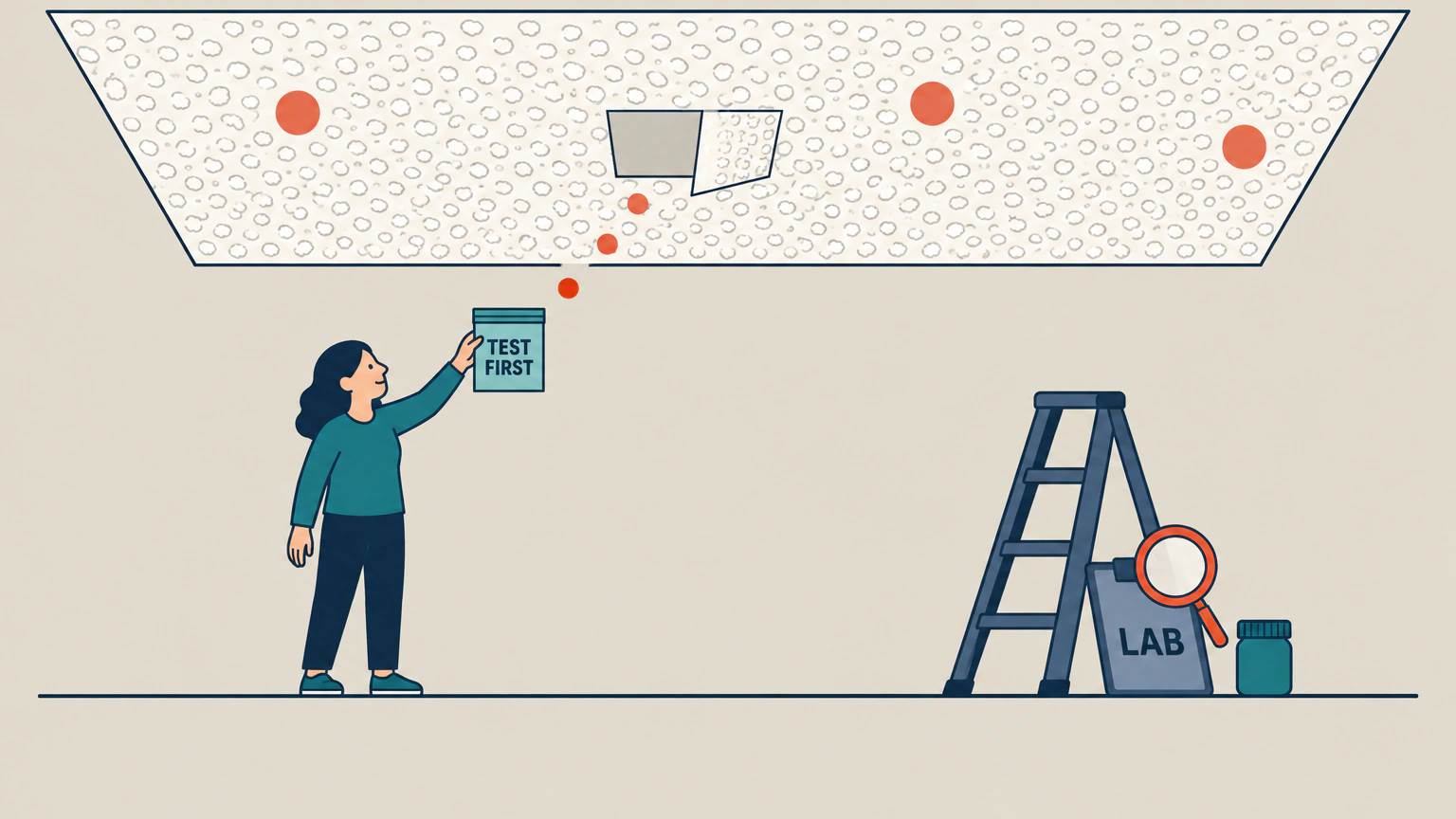
Leave it alone. Health Canada says some vermiculite insulation may contain asbestos, and that it poses very little risk while it stays sealed off from the living space. Don't store things in that attic or let kids play up there. Seal gaps around the hatch, light fixtures and outlets. If you're renovating or it has to come out, hire a trained asbestos professional. Never remove it yourself.
What else do these companies test for?
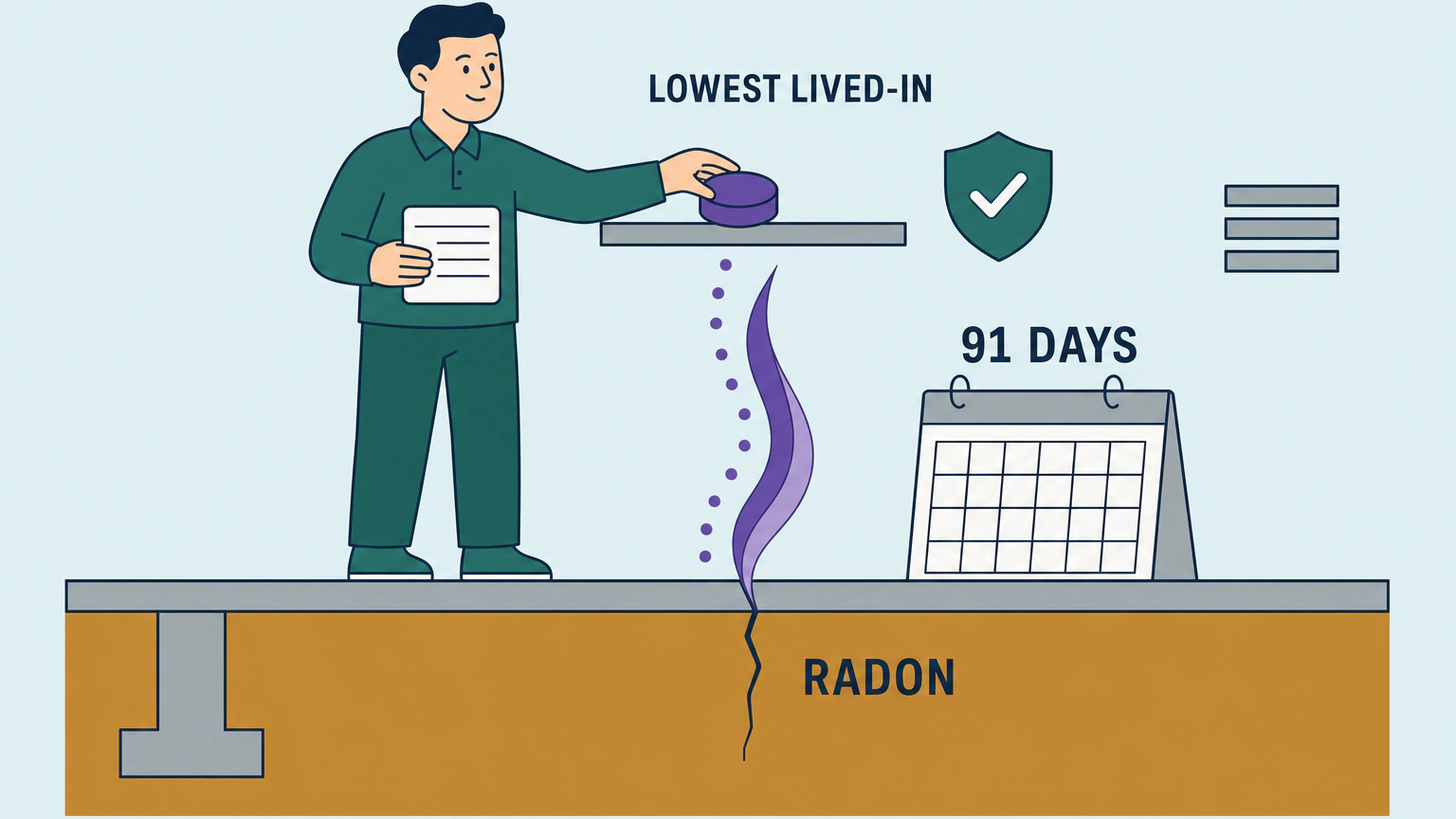
Radon is the big one. Health Canada says every home should be tested, using a long-term test that runs for months, ideally through the heating season, on the lowest level you use regularly. If you hire someone, it recommends a professional certified under the Canadian National Radon Proficiency Program. Asbestos is the other. Before renovating around old insulation, siding or tiles, Health Canada recommends a professional test.